
The Surround Sound Play That Drove 41% More Pipeline
Kelly Arndt
You know the moment right after you search "best running shoes," or spend five minutes on Nike's site, and then for the next week shoe ads follow you everywhere. There's no escape.
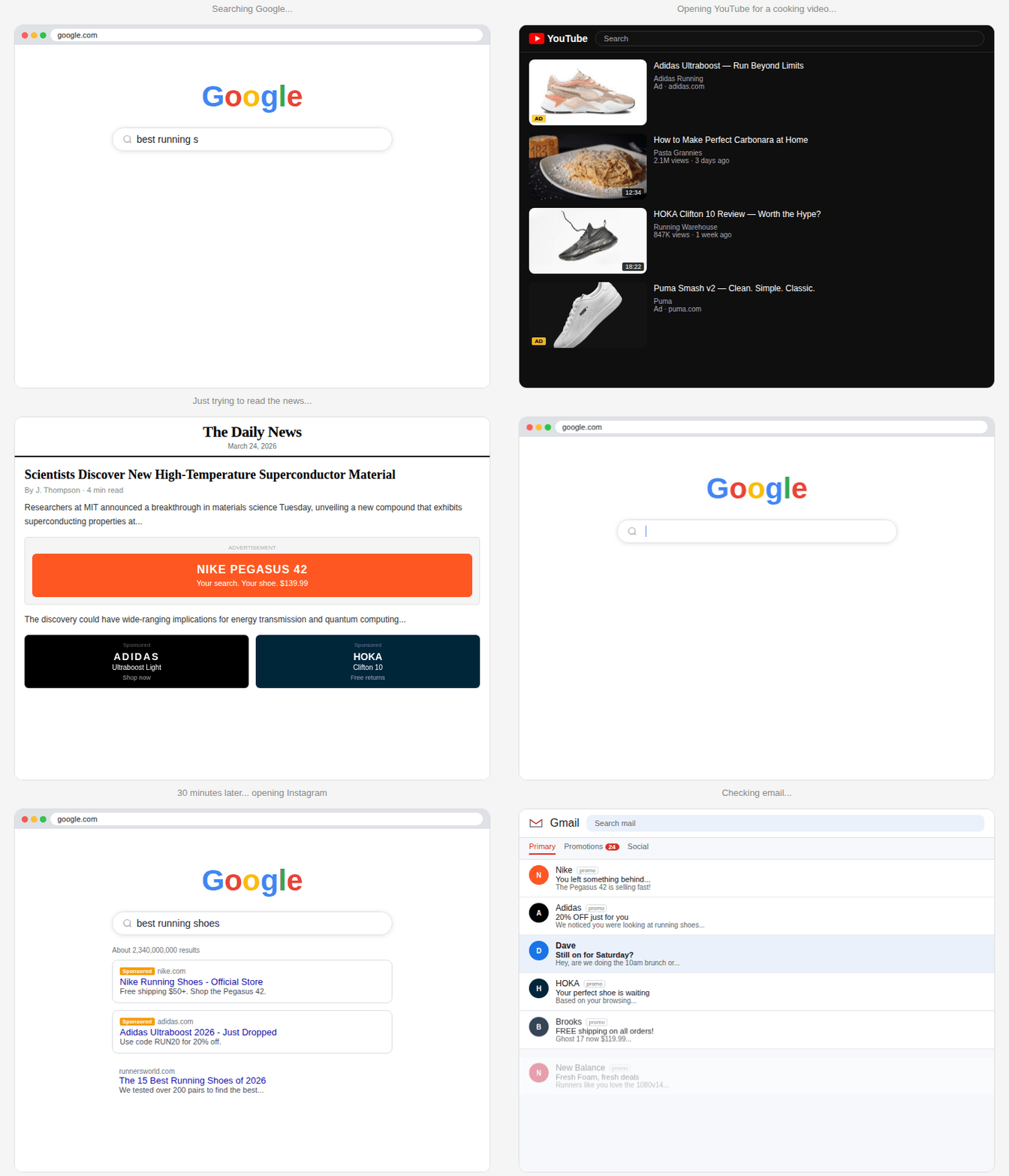
That's surround sound, and it's the gold standard in B2C. The question I wanted to answer was whether you can run the same thing in B2B: one hyper-targeted audience, everywhere your buyer looks, at the same time.
So we tested it. Six weeks, roughly $15K in media, and pipeline up 41% month over month. Here's the whole play.
The hypothesis
Surround sound plus sharp creative plus contact-level targeting equals pipeline.
Surround sound means showing up across multiple formats against the same audience simultaneously. The reason it's rare in B2B isn't that nobody wants it. It's that the targeting usually can't hold together across channels. Most account-based tooling orchestrates at the account level, which means your ads reach whoever at that company happens to be scrollable, and a fair number of bots and strangers besides.
The unlock is one targeting layer that extends across every campaign and channel at once. Define the audience once, then put it to work everywhere.
The campaign setup
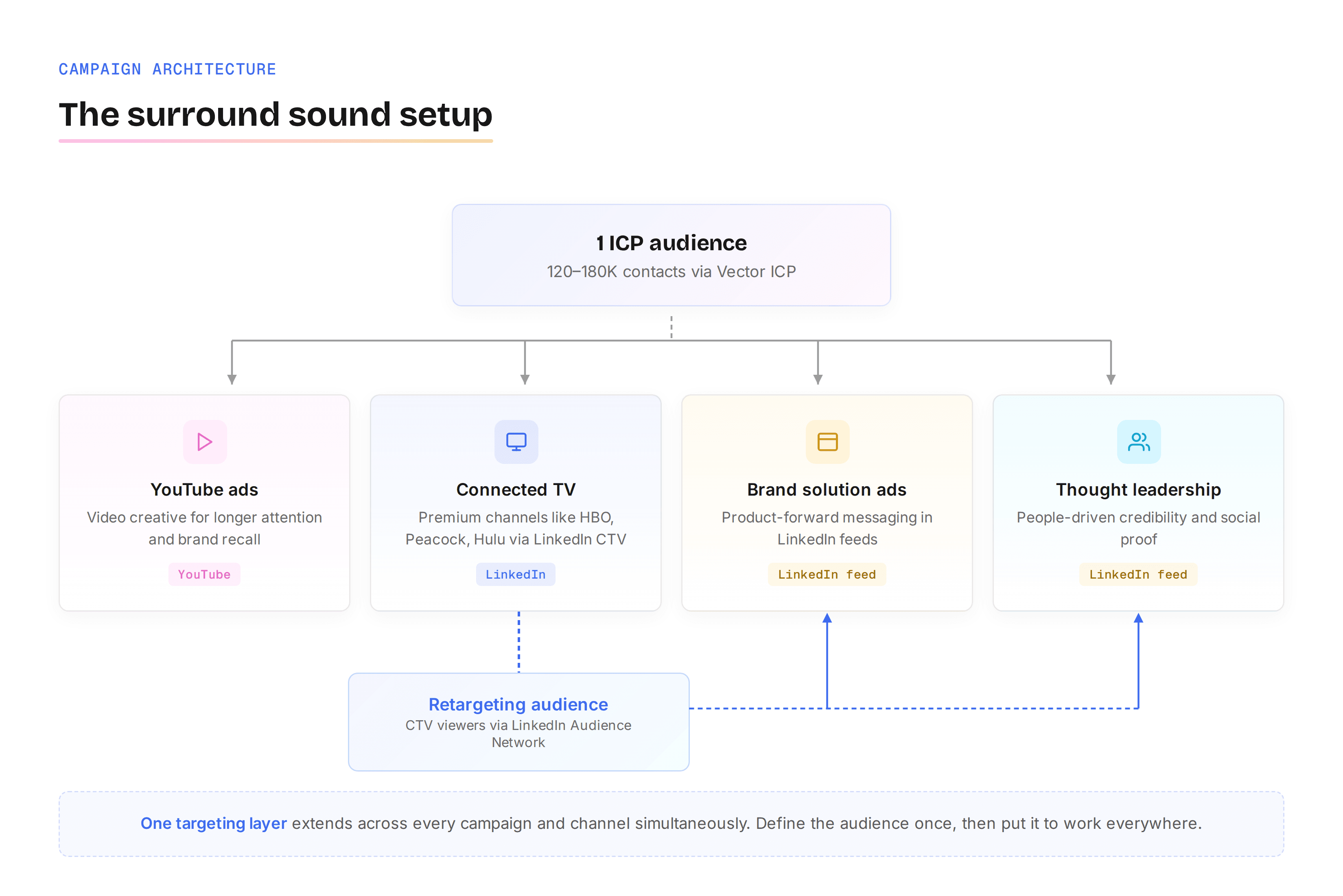
One ICP audience. Four campaigns. Killer creative.
That's what the whole play boils down to.
We started with the audience, pulling contacts whose titles matched our core buyers and landing at 120 to 180K. That range matters. Big enough to get real reach across four channels, tight enough that you're not lighting spend on people who'll never buy.
Then we ran that same audience across four campaigns:
- Connected TV, bought through LinkedIn. Most people don't know you can run CTV inside LinkedIn. The advantage is that you bring your own hyper-targeted audience and then layer LinkedIn's native controls on top for another level of precision. We used inclusion and exclusion lists to hand-pick premium channels we knew would carry the right brand association.
- YouTube. Same audience, same creative, different context. Longer attention spans, stronger recall.
- Brand solution ads. While CTV and YouTube built awareness, these carried the product-forward message into the same people's LinkedIn feeds.
- Thought leadership ads. People buy from people. These ran alongside everything else and did the social proof work the other three can't.
The retargeting loop
The part I'd steal if I were reading this: don't let the CTV audience stop at CTV.
LinkedIn CTV delivers to the audience you build, and it also augments it, because Audience Network is on by default to make sure your budget spends. So your segment doubles as a signal that pulls in lookalike contacts sitting slightly outside your definition. We leaned into that while keeping the native LinkedIn filters tight around our ICP to control the drift.
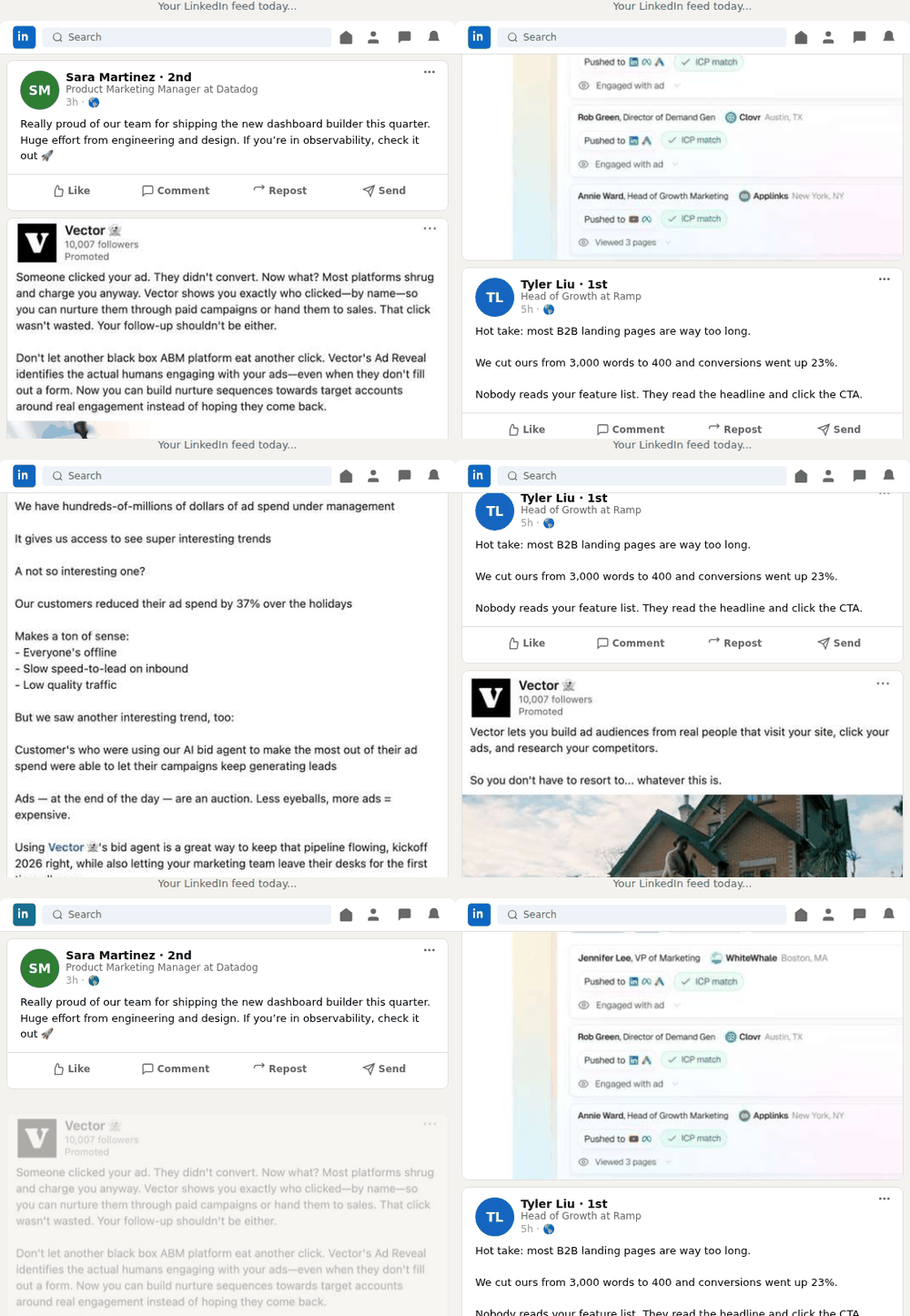
Then we built a retargeting list from everyone who saw a CTV spot and fed it straight back into the brand solution and thought leadership campaigns. That's what turns a passive viewer into a warmed-up audience you can actually move.
CTV starts the conversation. LinkedIn keeps it going.
In B2B, creative is king
If you're going to show up everywhere, you'd better be worth paying attention to.
You can spend enormous energy optimizing structure and targeting, and you should. But flat creative kills the campaign anyway. Someone is giving you the two seconds it takes to stop the scroll, so make it worth it.
The creative here was four short videos, developed with an agency partner. The concept was that marketers will go to any lengths to get in front of their audience. Our brand is quirky and slightly irreverent, so the spots had to hit that.
Before we spent a dollar on paid, we ran them organically on LinkedIn and YouTube to see how they'd land. They performed, which is what gave us the confidence to build the whole campaign on top of them. That's a cheap step and I'd never skip it again.
The results
Six weeks in:
- +34% net new traffic. Not returning visitors. People who hadn't found us before.
- +22% sales demo requests. Hand-raisers who saw the ads and wanted a conversation, not MQLs who downloaded something.
- +41% pipeline month over month. Actual revenue opportunity in the funnel.
On the CTV side specifically:
- 27K reach across premium channels, at an average frequency of 2.8. Most people saw it nearly three times.
- $81 CPM, against the $40 to $60 you'd see on a standard CTV buy. Higher, and worth it for premium placement against a hyper-targeted audience. For a channel most B2B teams aren't running at all, the early-mover advantage covers the premium.
- ~32% YouTube completion rate. Nearly one in three watched the whole thing.

The budget question comes up every time, so: total media was about $15K on CTV across the six weeks, and roughly $34K across the campaign, not counting video production. We saw momentum around the first $10K. You don't need a monster budget to find out whether this works.
Production is the real cost, and I'd rather be straight about it than let the media number stand alone. Four videos ran $35K, plus about $6K in talent renewal rights, which is a line item people forget until an invoice shows up. Turnaround was roughly three and a half months end to end: concepts, scripts, production, post.
How to run this yourself
- Start with the audience. Build a hyper-targeted list at the right scale, somewhere around 130 to 190K. Large enough for meaningful reach across channels, tight enough to stay efficient.
- Invest in the creative. Not where you bargain shop. Budget for video with enough humor, narrative, and production quality that someone looks up from their phone during a commercial break.
- Go multi-channel and multi-format at the same time. CTV, YouTube, and LinkedIn feed ads against one audience, concurrently. The simultaneity is what creates the effect. Run them in sequence and you've just got some campaigns.
- Close the loop with retargeting. Build the CTV viewer list and feed it back into LinkedIn.
- Control your placements. You get access to roughly 1,000 CTV channels. Don't take the defaults. Use inclusion and exclusion lists.
- Measure what matters. Not impressions. Net new traffic, demo requests, pipeline.
A few things worth knowing before you start
- CTV runs on Brand Awareness objectives only, with LinkedIn Audience Network enabled. That's a platform requirement, not a choice.
- Layer targeting controls on top of your core audience so you stay inside the buying committee.
- Expect higher CPMs. Hyper-targeting plus premium placement lands you around $65 and up. It's a real tradeoff, and I think it's the right one.
- Lean on your LinkedIn rep. They'll pull placement reporting, total reach, and percentage of target audience reached, which you can't fully see yourself.
- Build the CTV retargeting audience deliberately. It's how you catch buying committee members who weren't in your core list.
- Budget for actor renewal rights if you're working with an agency or studio. Separate cost, depends on placement.
- Cap frequency around 5 to 7 impressions a week. Enough to build familiarity, not enough to fatigue people.
- There's no minimum spend on LinkedIn CTV, whatever you've been told. $30 to $60K per campaign is the recommendation, and we saw signal well under that. Minimums apply to brand lift tests and premium CTV select, not to running at all.
The part that actually determines whether it works
Surround sound only works if the audience underneath it is precise.
Most B2B teams are building from stale lists, broad demographic filters, and platform-native guessing. Match rates come back low, the right people never see the ads, and the conclusion everyone draws is that the channel doesn't work. The channel was fine. The audience was never real.
Define the audience once, at the contact level, and keep every channel running off that same foundation. That's the whole unlock, and everything above it is execution.
I originally wrote this up for the Vector blog, where I run demand generation. This version is mine, with the product pitch taken out.